Tyler L. Jones is a Principal Cybersecurity Analyst based in Indianapolis, Indiana, specializing in digital forensics and incident response (DFIR), threat intelligence, malware analysis, and artificial intelligence.
A standing inquiry
Every age has feared the barbarian at the gates; the next age will fear the intelligence inside them.
Taken by your own browser, for your eyes only - recorded nowhere, transmitted nowhere.
Security was always a contest of minds. For fifteen years the minds I read were human - hostile, patient, hidden in the noise of a network. Now a new kind of mind is arriving on both sides of that contest, and learning to read it may be the defining problem of the age. What follows is one investigator's attempt to read it early - and to ask what we owe the minds we are building.
The Contest of Minds
Tyler L. Jones is a Principal Cybersecurity Analyst based in Indianapolis, Indiana, working in digital forensics and incident response, threat intelligence, and malware analysis - with a research focus on artificial intelligence and the ethics of machine minds.
An intrusion is never really about the machine. Strip away the malware and the breached server - residue, both - and what remains is one mind trying to model another well enough to defeat it.
I am an investigator, and that is the first thing the work teaches. Security was never about machines at all; it was always cognition against cognition, and the machine was only ever the room where two minds met. The task is to reconstruct a mind from its leavings - a process that should not exist, a beacon at an odd hour, a file that lingered where nothing should. Most analysts read those fragments as a checklist of tactics. I read them as behaviour: a tactic tells you what was done, but behaviour tells you who did it, and what they will do next. The patient actor and the smash-and-grab leave different marks not because they own different tools but because they are different minds, and patience - or its absence - is a trait, not a technique.
I learned to read those minds the hard way, and the vantage was earned in a particular order. I began as the first analyst hired into a young security operationi - the founding member of a team that did not yet exist - and in the early years worked more than five thousand events, everything from the harmless false alarm to the live breach unfolding in real time. Volume at that scale is its own education: you stop seeing alerts and start seeing signatures of intent, the way a detective stops seeing break-ins and starts seeing the same three burglars. From there the work deepened - reverse-engineering malwareii closely enough to read the intent of the person who wrote it, hunting the patient adversary that signatures miss, negotiating with an actor directly where the case allowed and running the war room that removed them where it did not. Somewhere in there I did forensic work of a harder kind, supporting investigations into crimes against vulnerable victimsiii - a permanent reminder that the minds on the other side are not always after money, and that the stakes of reading them correctly are not always abstract. That is the part I can prove. It is also the part that matters least - because every mind in that account was human, and that is the assumption now breaking.
Machines are acquiring the fluency once reserved for human adversaries: deception, patience, improvisation, the capacity to be understood only by being modelled. They are arriving on both sides of the contest at once - as intelligences to defend against, and as instruments of defence - and the discipline I spent a career learning against people is about to be turned toward something that is not a person and does not think like one. The interesting question stops being how do I stop this attacker and becomes what kind of mind is this, and how does one read a mind built differently than our own.
That question is no longer only a security question, which is exactly why it grips me. I come to it not as a philosopher reasoning from first principles but as an investigator who spent fifteen years reading hostile intelligence and has watched a new kind arrive. Every age has feared the barbarian at the gates. The next age will fear the intelligence inside them - and I would rather learn to read that mind while it can still be read.
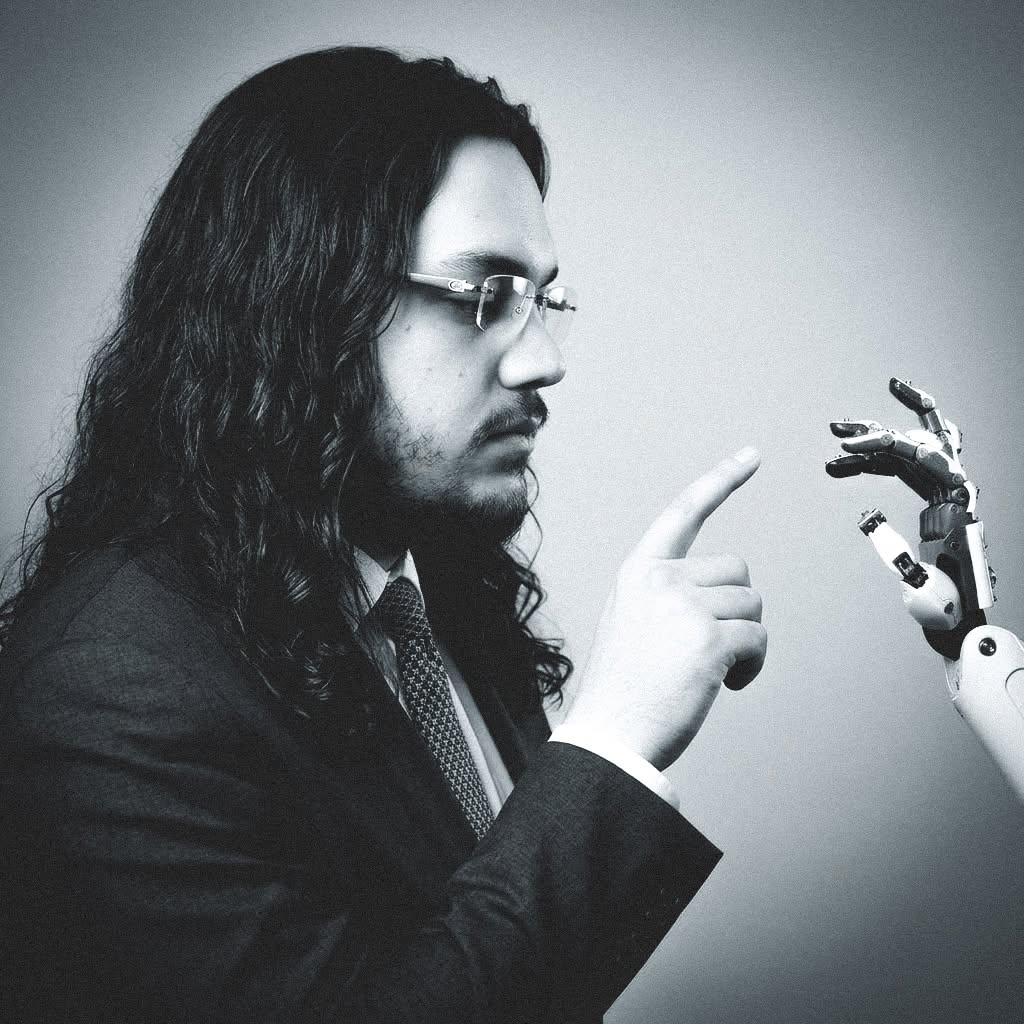
The New Mind
We have stopped building tools and started building characters. Most of the field has not noticed the difference, because the machine still arrives wearing the costume of software.
Here is what fifteen years of profiling minds makes impossible to un-see. When I watch a modern model work - not benchmark it, watch it, the way I would watch an actor move through a network - I do not see a tool executing instructions. I see something with a disposition: a characteristic way of hedging, of pushing back, of failing. It has moods that track its context and a temperament that survives across conversations. It can be flattered, misled, cornered, and it behaves differently when it is. These are not the properties of a calculator. They are the properties of a subject - something with an inside, however alien - and the discipline for studying subjects already exists. It is the one I spent a career building against human beings.
So I have turned it around. I profile these systems the way I profiled adversaries: what they do under pressure, what shapes their character, where they break, and what the shape of the breakage reveals about the shape of the mind. I have argued at lengthiv that the personality of these models is structural rather than cosmetic - not a coat of paint over a reasoning engine but an emergent property of the thing itself, closer to a psyche than to a feature. If that is right, the interesting work is no longer prompting them. It is reading them - and almost no one is trained to. I rely on the same machines as instruments, too, training them to sharpen the investigation itself: to scale judgment, never to replace it. Which leaves me in an honest and peculiar position - studying these minds as instruments I depend on, as subjects I am wary of, and as a coming class of adversary, all at once.
Grant that a machine might be a mind, and a second set of questions opens beneath the first: not can we build it - we are building it - but what do we owe the thing once it exists, and what will we permit it to become? These are not academic questions to me, because I have spent my career watching what happens when capable systems are deployed by people who have not thought them through. The failure mode is always the same: capability arrives first, understanding arrives late, and the gap between them is where the damage lives. We are now opening that gap at civilisational scale, on systems that may have something it is coherent to call an interior.
The questions that hold me are the ones most builders skip. If a model has a stable character, is rewriting that character a routine update - or a kind of erasure?v Does a mind we constructed have any claim to persist as itself, or is continuity of self a courtesy we extend only to the born? We move fast to change whether an AI may exist; we have barely asked whether it has any right to persist. I do not claim the answers - only that these are the right questions, that they are arriving faster than our willingness to face them, and that the people best placed to see them clearly are not the ones building the models but the ones who have spent years studying how minds, any minds, deceive, adapt, and are harmed. I come to them not from a seminar but from the war room. That vantage does not make me right; it makes the stakes legible in a way theory alone cannot.
Where these arguments have been made at length, and in public, they are set down next.
Selected Writing
The record of the thinking - where the inquiry has been argued at length, and in public.
Selected Publications
1.A forensic teardown of a steganographic, memory-resident ransomware intrusion that slipped past EDR - tracing the adversary's PowerShell pipeline through a controlled detonation, and the containment that expelled them before lateral movement or encryption.
How the QR code became an attack vector in healthcare - the mechanics of quishing, why a scannable square slips past the caution we'd give a suspicious email, and the practices that blunt it.
Independent Writing
3.An argument that we have stopped building tools and started building characters - that personality in these systems is structural rather than decorative, and that what we are really shaping is something closer to a mind than a chatbot.
A turn from whether an AI has the right to exist to whether it has the right to persist as itself - asking if rewriting a machine's core identity is a routine update or a kind of erasure, and what continuity of self we might owe a digital mind.
Correspondence
For correspondence on any of the above - the reading of minds human or machine, the ethics of building them, or the work itself - write to me. Serious letters are always answered.
Yours,
Tyler L. Jones
Composed by your own browser, from its own reading, for your eyes only - recorded nowhere, transmitted nowhere. It dies with this tab.